
I’ve had a great experience throughout my time here this summer. I’ve been able to learn and interact with so much and attach a lot more context to so many different topics, which has really helped in the development of my politics and actions.
I appreciate the Archives not just for the materials, but also for the actual space that it provides. I feel like just being in this physical space gives me an opportunity to think and piece things together. So many times I have been reading or listening to something and it will lead me to look something up or go down a of rabbit hole that opens up so much more for me than I feel like I would get from just asking baseless/abstract questions. I feel so much more prepared to return to the political climate of my university and having some perspective and inspiration related to what I hope to help build and achieve in the two years I have left.
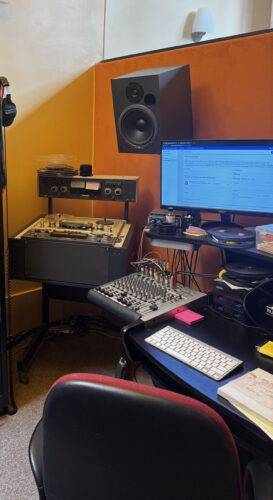
A specific project that really stuck with me was cataloguing some of Art Sato’s In Your Ear interviews. This consisted of me listening to and taking notes on cassette tapes around 2 hours in length that included an array of beautiful music and many conversations containing personal stories, musical techniques, and ideological influences of jazz artists that I would probably never know of if I did not interact with this collection. This is probably the aspect of this project that I appreciated the most, as a self-proclaimed music lover who admittedly knows very little about jazz and its recent history, engaging with this project has allowed me to uncover a new world of music that and history that has been pushed to the side for the majority of people my age. I also found it particularly fulfilling to actually learn how to use a cassette player, although very simple, remains a skill that is surprisingly rare amongst my peers.
Listening through many of these interviews, I felt a real sense of connection to these artists and history. At times it actually felt like I was in the room with Art Sato and whoever he happened to be interviewing, as I would use quick Google searches to piece together context and the future outcomes of these artists to whom I was listening. I also appreciated the political connections that so resounded across so many of the interviews and how many artists saw their music as an interpretation of the world they were experiencing around them. Especially with the way the interviews were structured with songs being played in between conversations, it was like I was seeing the world these artists were living in and simultaneously coming to life sonically and through spoken word. My favorite recording that I catalogued was the Mumia tribute which was on the same recording as the Douglass Ewart interview. The coalescence of actual music and spoken word testimonies from people like Assata Shakur and Mumia Abu Jamal was, to me, the epitome of what art is. It is an inherently political form of creativity that helps to paint a picture of possible and lived reality. It is fundamentally interdisciplinary and fuses so many different experiences and realities into one expression of struggle. Specifically in this recording, the fusing of poetry, music, and literal news reportings and updates all into one succinct creation is a literal creation or expression of a world within our world. Yet, it still serves a tangible purpose in the struggle to free our political prisoners and somehow find justice in a world reliant on the lack of it.
– Cyrus